
Building the African Bioinformatics Institute: Key Updates from the July Information Session
Dr. Jean-Baka Domelevo Entfellner, Chair of the Interim Council, opened with reflections on ABI’s evolving structure. He outlined the hybrid model being developed, one that combines central coordination with distributed implementation. Group leaders based in universities and research institutions, potentially connected through Regional hubs, will act as the building blocks of the institute, supported by advisory and governance structures adapted to Africa’s research and institutional landscape.
To apply, candidates must submit an online application form, a detailed CV, and an institutional letter of support confirming their institution’s endorsement and willingness to support the leadership role.
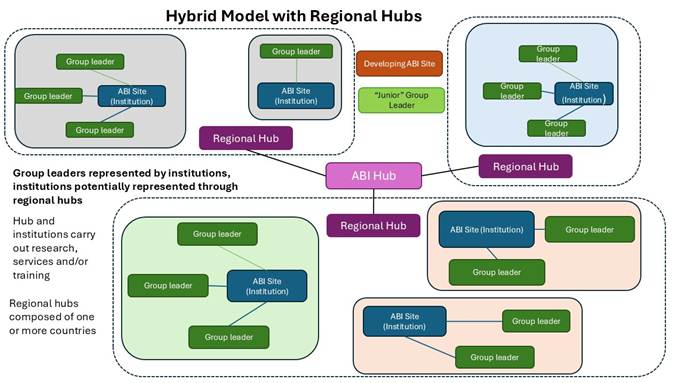
The session also described the criteria for ABI group leaders and the Executive Director role, both essential to the ABI’s future operations. These were presented by Dr. Domelevo Entfellner, who emphasized the importance of experience, leadership, and commitment to African research ecosystems. An open application process for group leaders will be launched soon, and these individuals will play a central role in coordinating research and service delivery. Research group leaders should be internationally recognized bioinformatics scientists, but the structure will allow for the future addition of emerging group leaders as well as affiliate members drawn to the ABI by their need for, or interest in, bioinformatics. The proposed model requires commitment at the institutional level, but the ABI will immediately work towards also securing government buy-in.
Prof. Nicola Mulder, ABI’s Interim Director, introduced the Community of Practice (CoP) themes, which emerged from overlapping proposals submitted through the ABI sign-up process. These CoPs will support collaboration between bioinformaticians and life science communities in key areas such as human genomics, pathogen surveillance, AI, and ethics. Founding members have been invited to draft terms of reference before broader participation is opened to the community.
Prof. Mulder also highlighted the ABI’s emphasis on practical, relevant training. An Interim Training Working Group has been established to assess current offerings, identify gaps, and develop a coordinated training plan. A pilot summer school is in planning for late 2025, aimed at postgraduate students, academic staff, and public health professionals.
The working group will also explore course accreditation and long-term professional development pathways, including mentoring and alignment with employer needs.
Laying the Infrastructure for Collaboration
Infrastructure is a critical enabler of ABI’s vision. Plans are underway to identify and coordinate High-Performance Computing (HPC) resources across the continent, supporting a federated model for secure and scalable data analysis.
Other upcoming initiatives include launching a student network, setting up a jobs board on the ABI website, and reaching out to pan-African institutions and big data initiatives for strategic alignment.
The ABI’s development is being shaped by African leadership and broad-based collaboration. To get involved or follow ABI’s progress, including joining a Community of Practice, visit: https://dev.bioinformaticsinstitute.africa/community/#cop
Watch the full recording here:

ABI Partners in £10M GEN-IMPACT Africa-Led Genomics Programme
The African Bioinformatics Institute (ABI) is a partner alongside the African Population Cohorts Consortium (APCC) and the Science for Africa Foundation (SFA Foundation), in GEN-IMPACT

Call for Applications: ABI Group Leaders
The African Bioinformatics Institute (ABI) is now accepting applications for Group Leaders. These positions are open to senior bioinformatics researchers
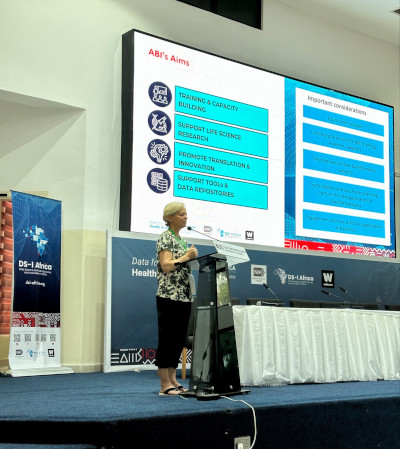
Showcasing the African Bioinformatics Institute at the DS-I Africa Consortium Meeting
On 28 August 2025, the African Bioinformatics Institute (ABI) held a showcase session at the 5th Annual DS-I Africa Consortium Meeting, hosted at the CEDI Conference Centre at the University of Ghana in Accra.
Home-grown solutions: The need for African approaches to African problems
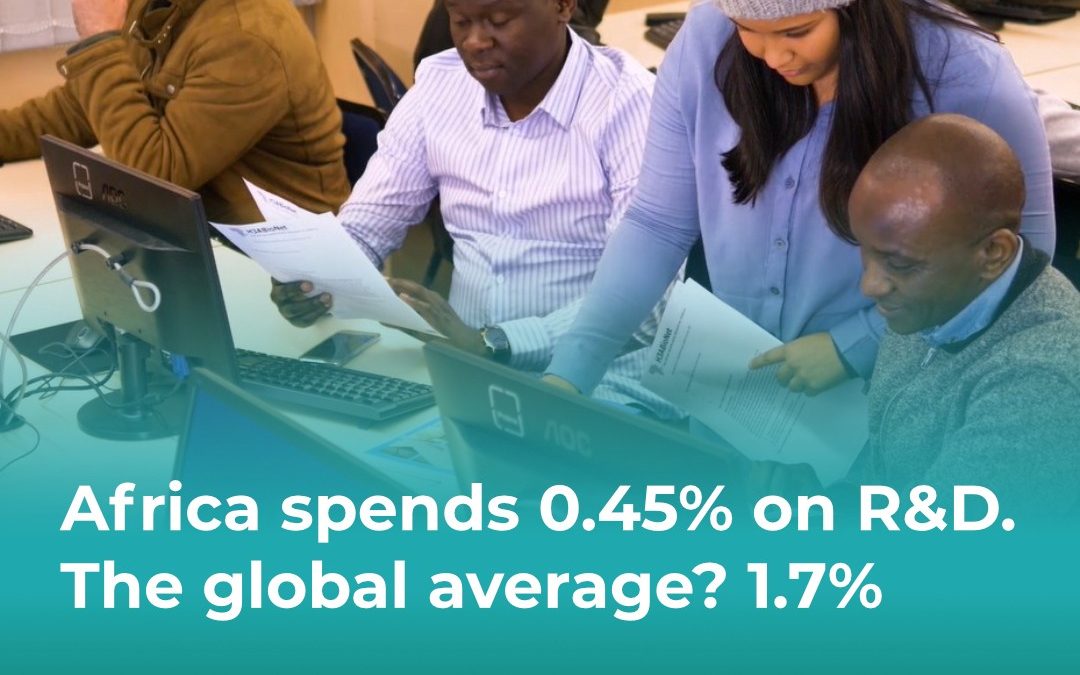
Africa accounts for nearly 19% of the global population, yet produces around 3% of the world's scientific research. The real-life implications are vast and